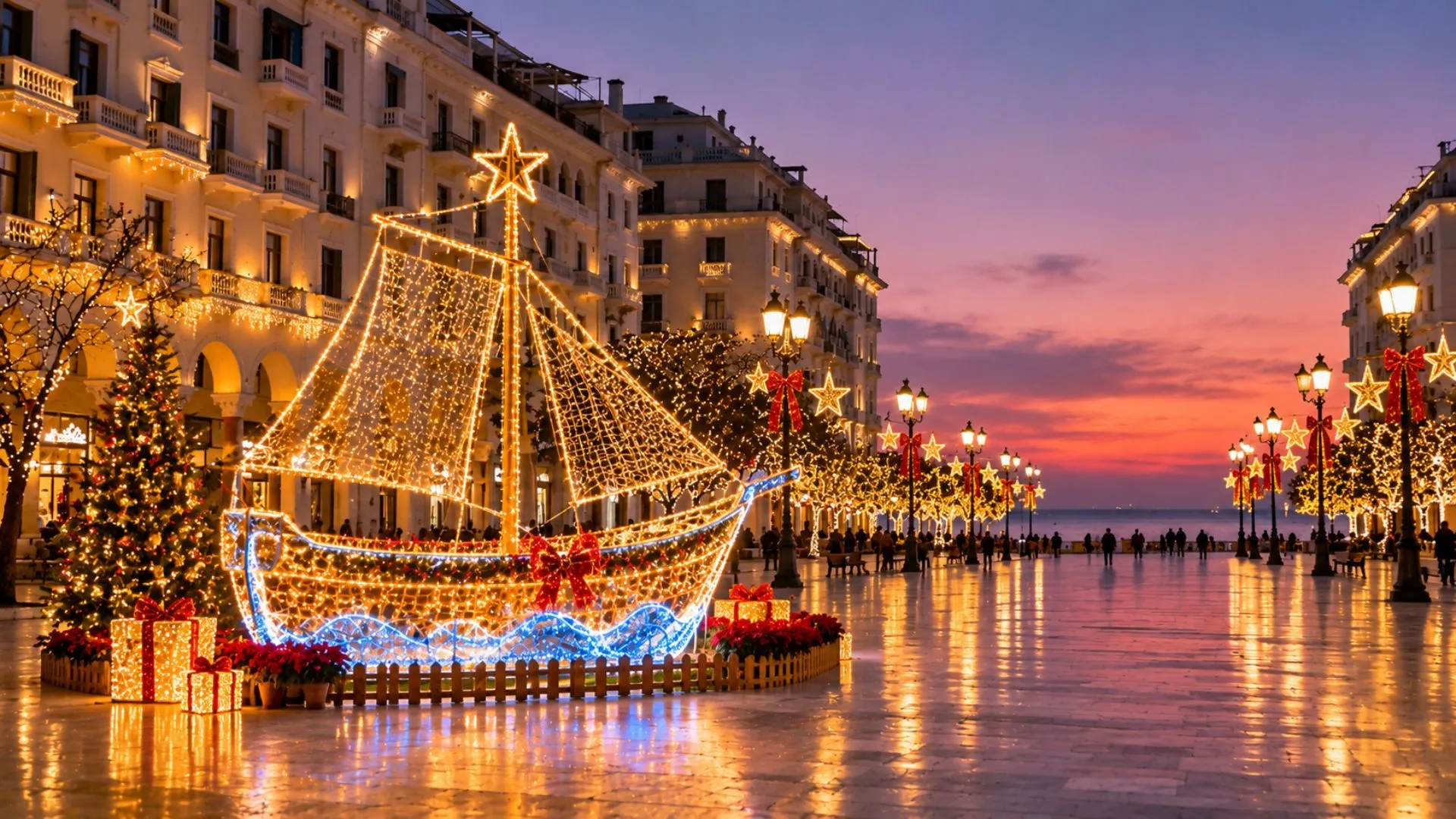
In Greece, Christmas ships outshine Christmas trees
Imagine walking through a Greek island village in December and finding a small wooden boat glowing with Christmas lights instead of the usual decorated tree. Surprising? In Greece, Christmas has a maritime twist that many visitors have never heard of. And that is only the beginning. From mischievous goblins hiding underground to a national debate over Christmas sweets, Christmas in Greece is full of traditions that make the festive season truly special.
In This Article
- The karavaki: Why Greeks decorate boats, not trees
- The kalikantzaroi: 12 nights of goblin mischief
- The Christmas table: Melomakarona vs kourabiedes
- Where to experience a Greek Christmas
- A Christmas road trip: mountain villages in December
- Experience Christmas in Greece with Abbycar
- Frequently Asked Questions
The karavaki: Why Greeks decorate boats, not trees
In most European countries, Christmas means decorating a fir tree. But in Greece, the traditional Christmas decoration was once something completely different. A small wooden boat, known as a karavaki, was, especially in past decades, the main decoration during Christmas period.
Why a boat? The answer lies in Greece's long maritime history. For centuries, countless Greek families depended on the sea, with fathers, husbands and sons spending months away from home as sailors or fishermen.
Decorating a boat at Christmas symbolized hope, safe journeys and the joy of welcoming loved ones back home. In some coastal communities, families displayed small illuminated boats in their homes or windows, honoring their connection to the sea.
The Christmas tree eventually became the dominant decoration, particularly after its introduction into modern Greek festive life during the 20th century. However, the karavaki never disappeared.
Today, you can still find decorated boats in Greek homes, island villages and public squares, sometimes standing right beside huge Christmas trees.
It is one of the most beautiful Greek Christmas traditions, reminding visitors that this country's identity has always been closely connected to the sea.
The kalikantzaroi: 12 nights of goblin mischief
Forget Santa's elves. Greek folklore has something considerably more mischievous.
Meet the kalikantzaroi, strange little creatures that supposedly emerge from underground during the twelve days between Christmas and Epiphany, on January 6.
According to traditional stories, these goblins spend most of the year beneath the earth, trying to saw through the enormous tree that supports the world. Just as they are about to finish their work, Christmas arrives, and they abandon their mission in order to cause trouble among humans.
What kind of trouble? Stealing food, making strange noises, upsetting household objects and generally creating chaos.
The kalikantzaroi were believed to be particularly active at night. To protect their homes, people traditionally used several unusual methods:
- Keeping the fireplace burning: Fire was believed to prevent the creatures from entering through the chimney.
- Drawing crosses with ashes: In some local traditions, crosses made with fireplace ashes were placed near doors or entrances for protection.
- Using garlic or other protective symbols: Certain communities believed these could keep unwanted visitors away.
Fortunately, the goblins disappear on January 6, when priests bless the waters during Epiphany celebrations.
And the world-tree? According to the legend, it has grown back while the kalikantzaroi were away, meaning they must start sawing all over again.
The Christmas table: Melomakarona vs kourabiedes
Ask Greeks which Christmas sweet is better, and you may start a surprisingly passionate debate. There are two traditional favorites, and almost every Greek household has its preference.
Melomakarona is the honey-covered biscuit which almost all love. They are soft, fragrant biscuits made with olive oil, orange and spices, soaked in honey syrup and topped with chopped walnuts. Their rich flavor and comforting aroma make them one of the most recognizable symbols of Greek Christmas. Many families prepare large batches in December, and bakeries display them in impressive quantities throughout the festive season.
Kourabiedes are the snowy Christmas biscuits. They are buttery almond biscuits generously covered in icing sugar, giving them their characteristic snow-white appearance. They are crumbly, rich and delicious, although eating one without covering yourself in sugar is almost impossible.
Which one wins? There is no official answer. The safest approach when visiting Greece in December is to try both and decide for yourself.
Where to experience a Greek Christmas
Although Greece is famous for its summer holidays, December reveals a completely different side of the country. Athens and Thessaloniki are particularly interesting destinations for visitors who want to experience traditional celebrations alongside modern Christmas festivities.
Athens: Syntagma's tree and the boat beside it
If you are planning Christmas in Athens, Syntagma Square is the perfect place to begin.
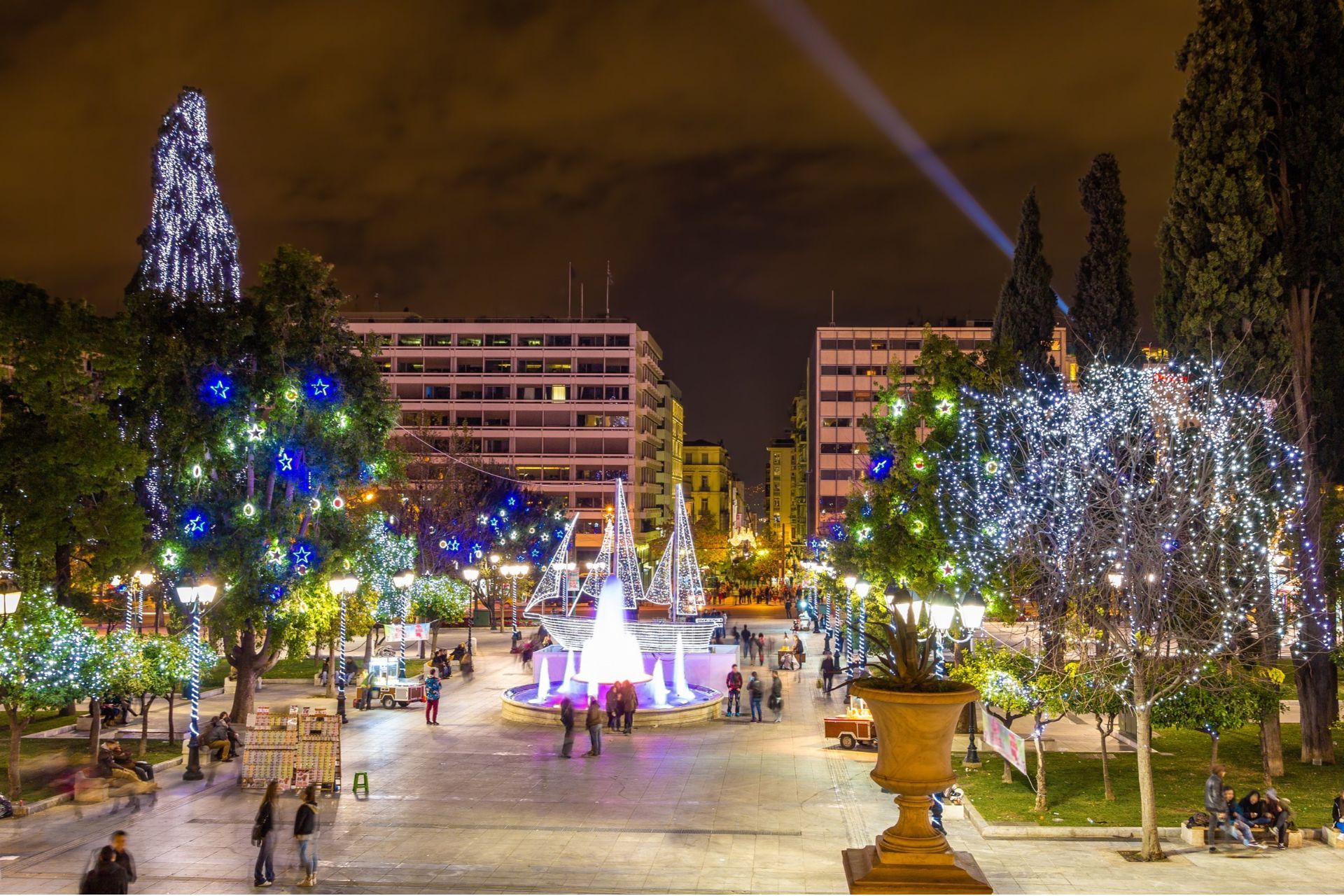
Every December, the square becomes the center of the city's celebrations, with an impressive Christmas tree, festive decorations and seasonal events. Some years -but not always- a traditional karavaki is displayed alongside the tree and visitors can see how Greece's maritime heritage meets modern Christmas customs.
Beyond Syntagma, walk through Ermou Street, explore the decorated streets of Plaka and enjoy the Christmas atmosphere around Monastiraki.
One advantage of visiting Athens in December is that the weather is generally milder than in northern Europe, making sightseeing and outdoor walks more comfortable.
If you want to explore beyond the city, renting a car from Athens Airport also gives you the opportunity to discover traditional villages and mountain destinations.
Thessaloniki: The biggest karavaki in Greece
Thessaloniki has a strong maritime identity, making it another wonderful destination for discovering the karavaki tradition.
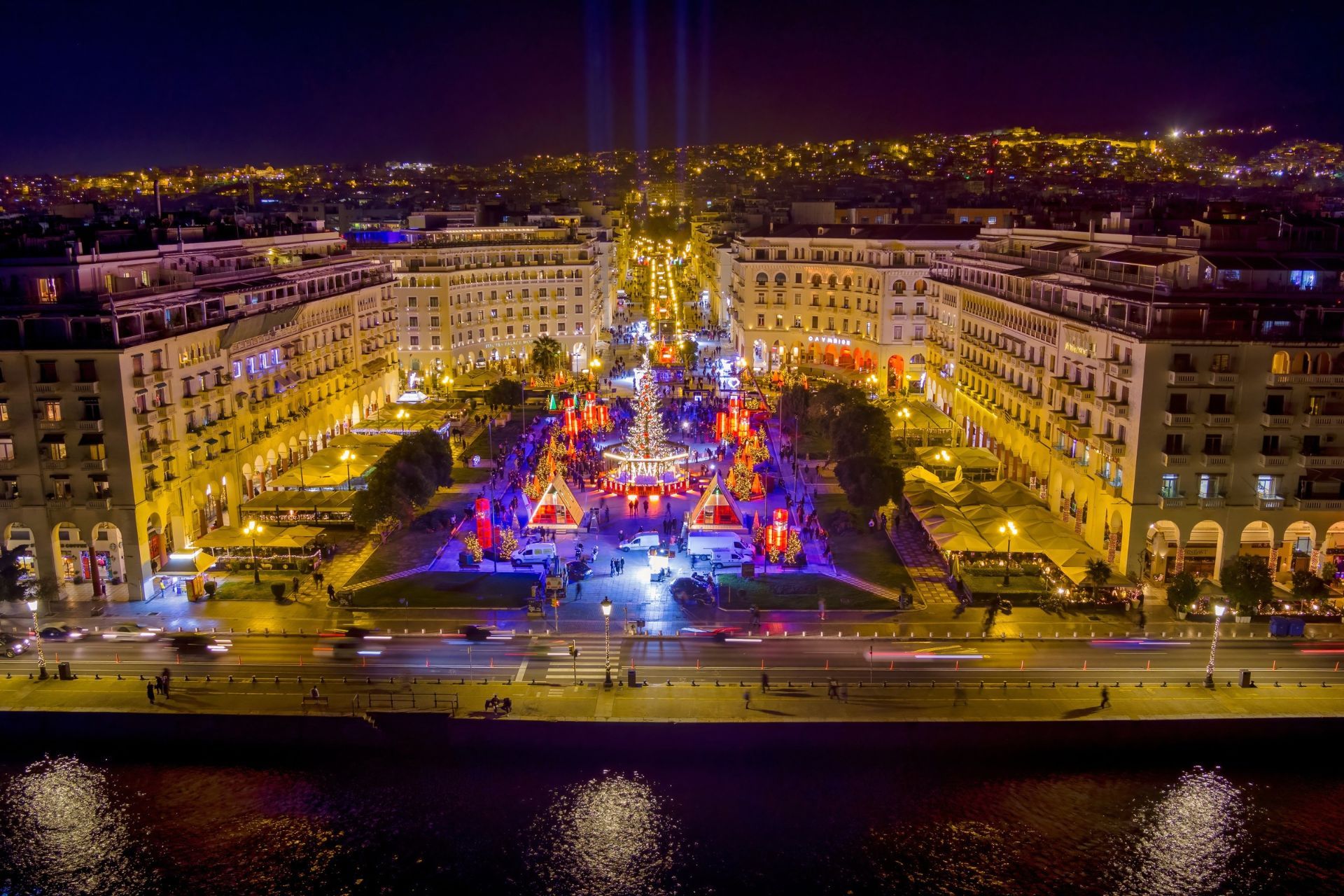
The city has celebrated Christmas with impressive boats, including large-scale festive installations. Although the exact decorations change each year, the traditional Christmas boat remains an important symbol of the city's connection to the sea.
Aristotelous Square is the heart of Thessaloniki's festive atmosphere, with Christmas lights, seasonal activities and decorated streets.
Visitors can also enjoy the waterfront promenade, explore the Ladadika neighbourhood and try traditional Christmas sweets in the city's famous bakeries.
Thessaloniki is also an excellent starting point for winter excursions to northern Greece, especially if you have a rental car.
A Christmas road trip: mountain villages in December
Want to discover another side of Greece in December? Leave the cities behind and drive in the mountains.
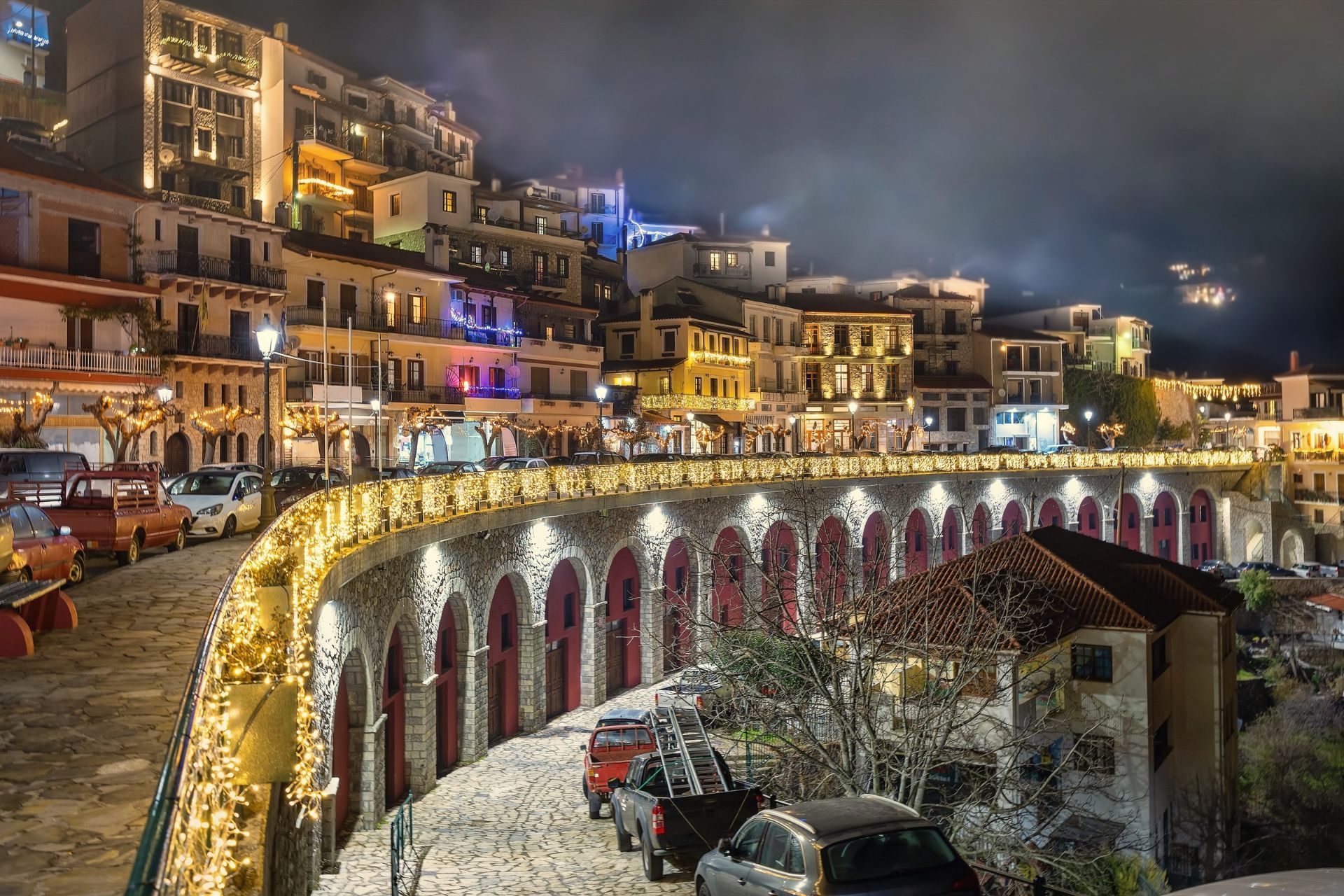
One of the most popular winter road trips is the drive from Athens to Arachova, a picturesque mountain village on the slopes of Mount Parnassus. Located approximately 2.5 hours from Athens by car, Arachova is famous for its traditional stone houses, cozy cafés, local tavernas and beautiful winter atmosphere.
During December, the village becomes particularly charming, with festive lights, decorated streets and, when weather conditions allow, snowy mountain scenery. You can combine your visit with nearby Delphi, one of Greece's most important archaeological sites, or continue towards the Parnassos ski area.
A rental car is especially convenient for this journey, allowing you to explore the surrounding villages and enjoy scenic stops without depending on public transport schedules.
However, mountain weather can change quickly in winter, so always check road conditions and ensure your vehicle has the legally required winter equipment when necessary.
Experience Christmas in Greece with Abbycar
With more than 15 years of experience in car rental, Abbycar helps travelers discover Greece beyond the usual tourist routes. Whether you are arriving in Athens or Thessaloniki, our convenient airport rental locations, modern vehicles and transparent pricing make planning your winter road trip simple.
Choose your ideal car, explore traditional Christmas villages and experience a side of Greece that summer visitors rarely see.
Book your rental car with Abbycar and make your Greek Christmas adventure unforgettable!
Frequently Asked Questions
Yes. Greece celebrates Christmas on December 25, while January 1 is also an important festive day, associated with Saint Basil and the traditional New Year's cake, vasilopita. The Christmas season continues until Epiphany on January 6.
A karavaki is a small decorated Christmas boat. It represents Greece's maritime heritage and traditionally symbolizes safe journeys and the return of sailors to their families.
Yes, Athens remains a lively destination throughout December. However, many shops, museums and archaeological sites close on December 25 and 26 or operate on special holiday schedules. Restaurants and cafés may remain open, particularly in tourist areas, but reservations are recommended.
Absolutely, especially if you enjoy cultural experiences, festive cities and mountain villages. Coastal areas are generally quieter, while destinations such as Arachova and the Parnassos region become popular for winter holidays. December weather varies considerably between the islands, cities and mountains.

AbbyCar Car Rental Experts
Car Rental & Travel Mobility Experts
Abbycar’s articles are created by experienced car rental professionals specializing in international travel. With deep knowledge of rental processes, insurance, and local regulations, our goal is to provide accurate, transparent, and reliable guidance to travelers worldwide.
For more travel advice and car-rental insights, visit AbbyCar Blog